
Can You Use Corten Steel for a Water Feature
The answer is unequivocally yes—weathering steel is entirely suitable for water features. Indeed, it ranks among the most durable and architecturally appealing materials in contemporary landscape design.Unlike ordinary carbon steel, weathering steel (commonly referred to as weathering steel) undergoes special engineering to develop a stable, self-protecting oxide layer—commonly known as a patina. This rust patina effectively blocks deeper corrosion. While ordinary steel will eventually rust through and leak when exposed to water over time, weathering steel thrives in the alternating wet and dry conditions of water features, boasting a service life of 35 to 50 years or more.
As specialists with deep expertise in this field, AHL Corten Group has provided weathering steel solutions for over 500 commercial and residential water feature projects worldwide. Below, we comprehensively analyse the core value and practical considerations of weathering steel water features from scientific principles, real-world applications, and installation techniques.
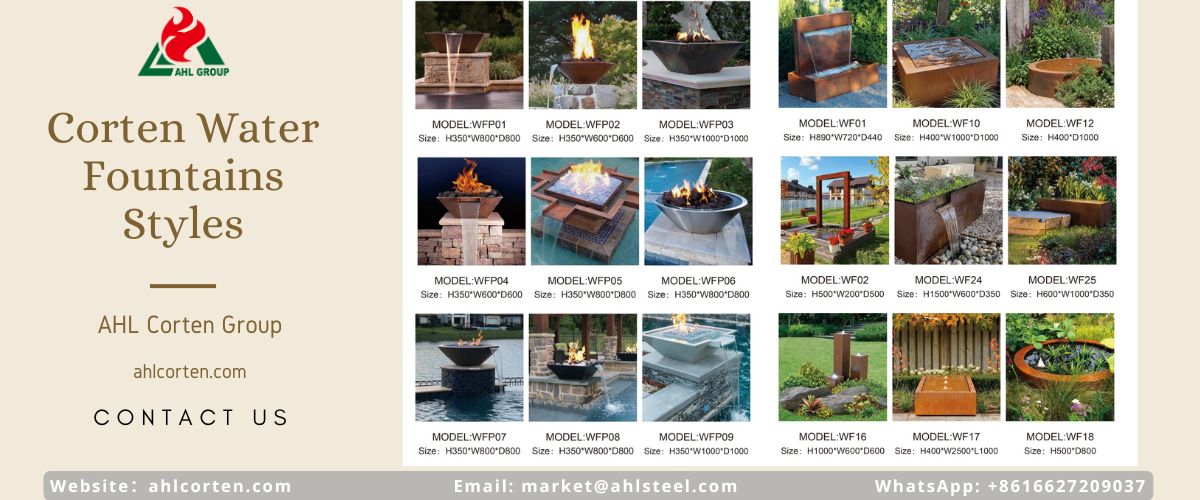
The Science of Corten Steel in Aquatic Environments
How Does The Rust Patina of Corten Steel Undergo “Self-Repair” Underwater?
Weathering steel (particularly ASTM A588 grade) contains alloy components such as copper, chromium, and nickel. Upon contact with water and oxygen, it gradually forms a dense “rust” surface layer.
Its core advantage lies in its ‘self-repairing’ property: if the surface is scratched by gravel or cleaning brushes, the steel re-oxidises, reforming the rust layer to fill gaps and maintain continuous protective integrity.
The Importance of Alternating Dry and Wet Conditions: To ensure healthy rust layer formation, water features should not remain stagnant for extended periods. Regular operation is recommended. This allows the steel to ‘breathe’, further enhancing the stability of the protective layer.
Material Grade Comparison (Expert Analysis)
Different steels exhibit vastly differing performance in aquatic environments. Below is a comparison of core metrics for three common materials:| Material Type | Corrosion Rate | Expected Service Life | Maintenance Level |
| Corten Steel (ASTM A588) | Extremely Low (Self-Protecting) | 40-50 Years | Zero Maintenance (Exterior) |
| Galvanized Steel | Medium (Accelerated after Coating Damage) | 10-15 Years | High Maintenance |
| Mild Steel | High (Continuous Pitting) | 3-5 Years | Frequent Maintenance (Repeated Painting) |
Confronting the Challenge of “Rust Water Pollution”: Professional Solutions
The foremost concern for homeowners and landscape designers is rust water pollution. Within 6-12 months of installation, weathering steel water features enter a “bleed-out” phase, releasing iron oxide. If situated adjacent to areas such as white tiled patios, this may leave permanent orange stains.
Industry-Standard Rust Stain Mitigation Solutions
Drawing upon years of project experience, we have identified three proven, effective approaches:
Solution 1: Buffer Zone Strategy
Design a 10cm-wide buffer zone around the base of the water feature, paved with dark river stones (such as black basalt or Mexican beach pebbles). These stones adsorb minute iron particles, rendering rust staining invisible while enhancing the landscape's visual depth.Solution 2: AHL Pre-Rusting Service
AHL offers factory acid washing and salt spray treatment to accelerate rust layer formation. This ensures the rust layer is 80% stabilised upon site delivery, significantly shortening the on-site bleeding period and reducing staining risks.Solution 3: Localised Chemical Sealing (Targeted Application)
We never recommend sealing the exterior of weathering steel—this compromises its natural oxidised aesthetic. However, transparent epoxy resin sealing may be applied to internal water reservoirs. This maintains water clarity while preventing rust particles from clogging pumps, thereby extending equipment lifespan.
Engineering Essence: Professional Installation Techniques
Successful garden water feature installation demands not only aesthetic design but also precise structural engineering support. The following two points are fundamental to ensuring long-term stability:
Foundation and Weight Management
A large weathering steel water wall can weigh over 200 kilograms. Combined with the weight of water, this places extremely high demands on the foundation.
Rule of thumb: Installation must occur on a level concrete base layer, with a minimum thickness of 10 centimetres.
Preventing ground settlement: Never place the feature directly on soft soil or mulch. The weight will cause it to tilt, disrupting the water curtain's integrity and compromising visual impact.
Pump Protection (Authoritative Guide)
The primary cause of failure in metallic water features is pump burnout due to sediment accumulation. Implementing these two measures provides effective pump protection:
Filtration System: Employ a two-stage filtration process. First, use a coarse filter to intercept large particles such as fallen leaves. Subsequently, employ a fine mesh ‘pump bag’ to filter out minute rust particles generated during the first year of operation.
Installation Position: Elevate the pump using a small stand, ensuring it remains at least 5 centimetres above the pool base. This prevents the pump from drawing in sediment deposited at the bottom, thereby reducing equipment wear.
Top 4 Corten Steel Water Feature Designs for 2026
1. Monolithic Water Wall
A vertical focal point that produces a deep, soothing sound of flowing water. Ideal for screening urban traffic noise and creating tranquil ambience in outdoor spaces.2. Infinity Reflective Bowl
A low-profile design creating a mirror-like water surface that reflects the sky and surrounding greenery. An ideal choice for Zen gardens or minimalist courtyards.3. Geometric Cascading Spouts
A modular trough design where water flows down in tiers to create a cascading effect. Particularly suited to sloping gardens, it adapts to the terrain to build a sense of layering.4. Integrated Planting-Pond Unit
Merges lush greenery with flowing water features within a single weathering steel unit. Combines decorative appeal with ecological functionality, aligning with biophilic design trends.Frequently Asked Questions for Corten Steel Water Feature
Q1: Does Weathering Steel Make the Water Toxic to Fish?
A: Once the rust patina stabilises (approximately six months), it becomes inert and safe. However, during the initial leaching phase, iron levels in the water may rise. We recommend allowing at least one season's “acclimatisation period” before introducing sensitive fish such as koi.Q2: How Can Water Clarity Be Maintained?
A: Use pH-neutral algaecides. Avoid chlorine or alkaline cleaners, as these chemicals severely erode the patina layer, compromising the steel's structural integrity.Q3: Can Corten Steel Water Features Be Used In Coastal Areas?
A: Absolutely! Weathering steel performs exceptionally well in salt spray environments. Salt actually accelerates the formation of a dense patina layer, further enhancing durability.Q4: Will It Rust Through Within My Lifetime?
A: Using AHL-standard 3mm thick steel, the corrosion rate is approximately 0.01mm per year. Rust-through would take centuries. Avoid 1mm thin products sold in large supermarkets, as their durability cannot be guaranteed.Q5: Does Temperature Affect the Rust Layer Formation On Corten Water Features?
A: Mild climates accelerate rust layer formation; In regions with freezing periods, winter frost protection is essential—drain the water feature and remove the pump to prevent ice expansion from deforming the steel.Q6: Can I Diy a Corten Water Feature, or Is Professional Installation Mandatory?
A: Small modular designs (e.g., stacked geometric spouts) are suitable for DIY; complex structures like large water walls require professional foundation work and engineering design. AHL provides comprehensive technical guidance throughout.Why is AHL Corten Group the industry's preferred choice?
When selecting suppliers, price is not the sole consideration; steel grade and welding quality are paramount. AHL Corten has become the industry benchmark through three core strengths:
1. ASTM A588 Certification Assurance
Every batch of steel is accompanied by a material test certificate, ensuring the weathering steel used complies with international standards and safeguarding product quality from the outset.2. Precision CAD Engineering Design
Our water wall products incorporate internal support structures, effectively preventing ‘bulging’ deformation caused by water pressure and ensuring structural integrity.3. Optimised Global Logistics
We have refined global shipping routes to prevent heavy steel components from sustaining dents or deep scratches during transit – damage that directly compromises the uniform formation of the rust patina.4. Tailored Client Support
Residential Clients: Custom design consultations to craft bespoke backyard retreats;Commercial Clients/Landscape Architects: 2026 wholesale pricing alongside project-specific engineering support.
Ready To Commission Your Bespoke Outdoor Weathering Steel Water Feature?
A weathering steel water feature dynamically elevates any landscape. It transforms colour with rainfall, glows with orange hues at sunset, and offers a lifetime of tranquil auditory experience.
By understanding its weathering process and adhering to professional installation standards, you can transform your garden into a sophisticated architectural retreat.
Ready to launch your project? Contact the AHL Engineering team today for a bespoke quotation. Landscape designers and contractors benefit from our 2026 wholesale special rates.
Home & Garden
- BBQ grill
- corten steel metal planter for outdoors
- garden bollards lights
- garden screens
- steel tree grates
- fire pit
- garden sculptures and statues
- garden water fountain
- garden edging
- bio ethanol fireplace
- Corten Fence Panels
- Corten Steel Water Features Manufacturers, Suppliers, Factory & Exporters | AHL Group
- Corten Steel Gardening Products
- Corten Steel Garden Edging
- Metal Gas Water Fire Fountain
- Corten Exterior Cladding
Mild Steel
Stainless Steel
Aluminum Sheet
Steel Processing & Services
News
-lp.jpg)
 Get a quote, Now!